Request and intake
1–3 working days
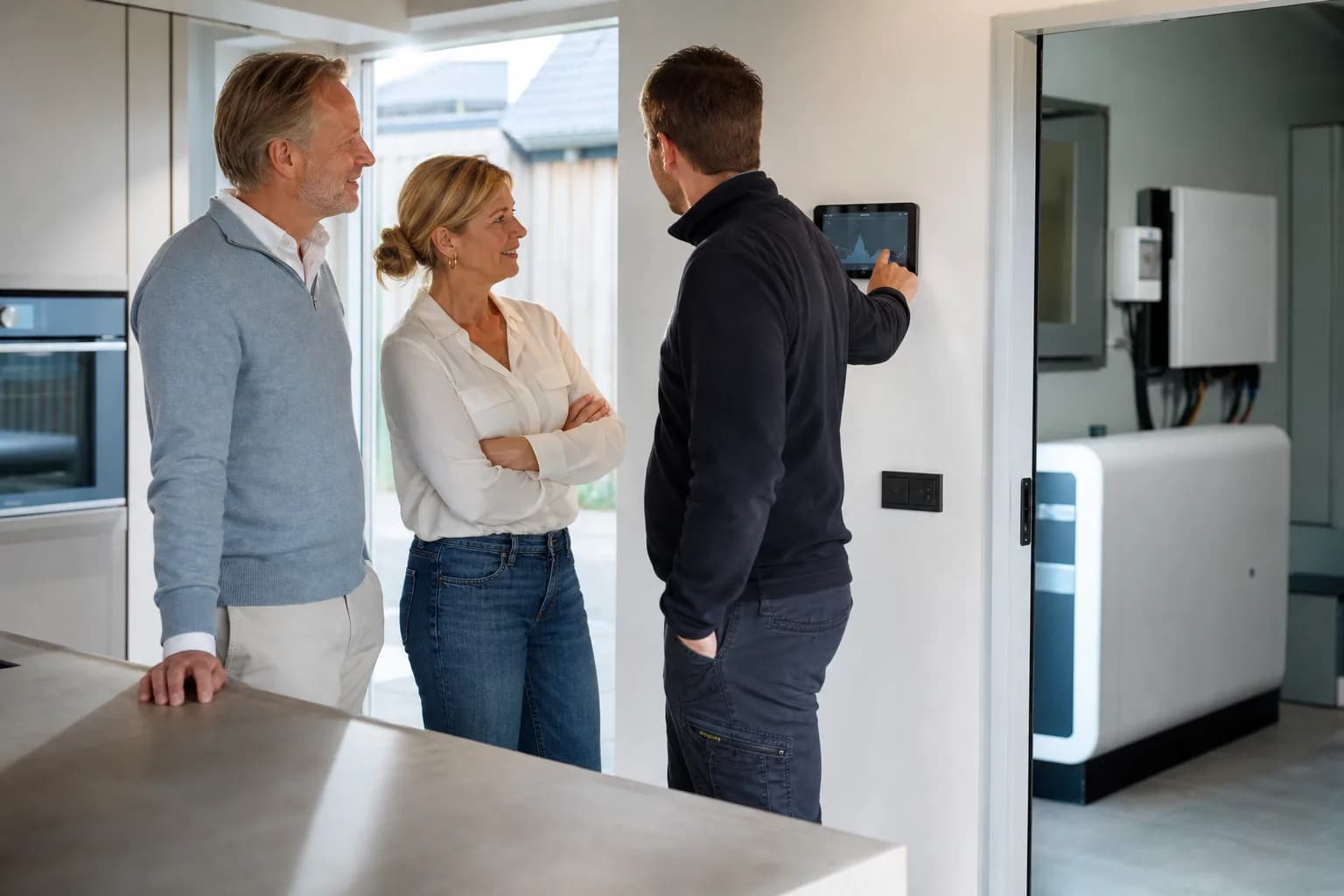
Thuisaccu installatie
How long does installing a home battery take and what does connection involve? Here is a realistic timeline from request to handover, a day schedule for mounting and which documents you receive.
Book a free consultation
Enter your details. We will call you within 24 hours.
Step 1 of 5
Where will the battery be installed?
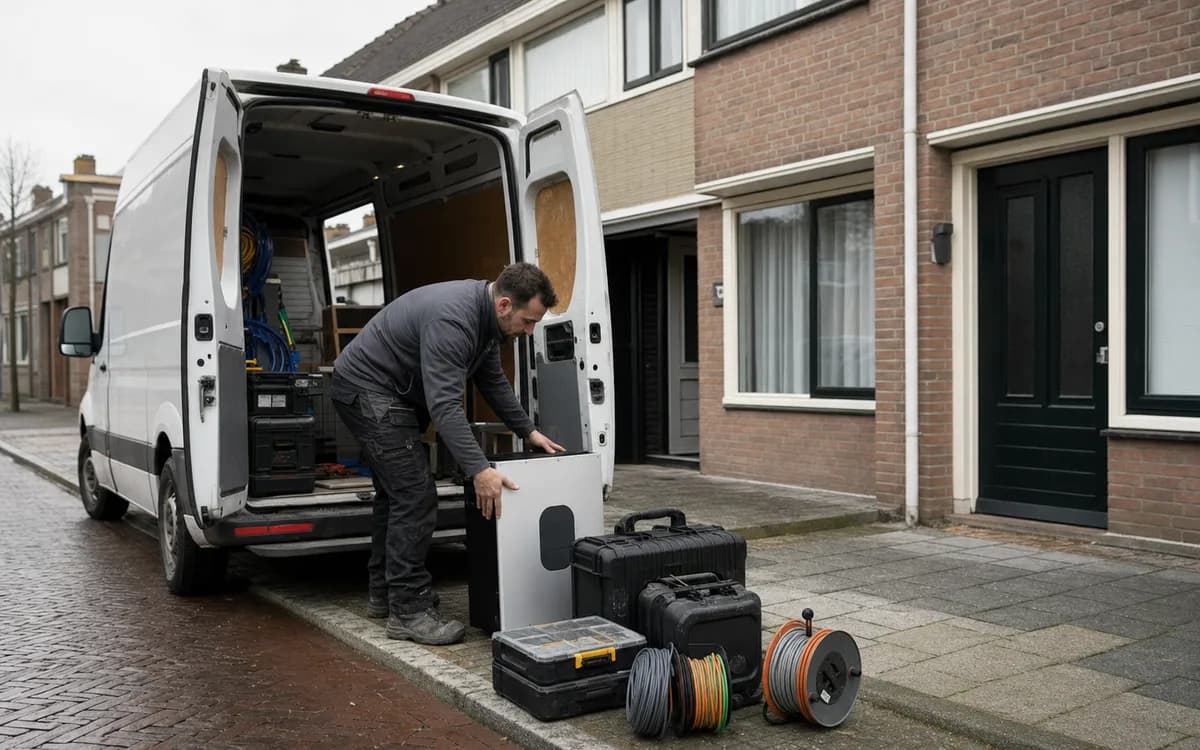
From first request to working battery, allow roughly two to six weeks in practice. Survey usually follows within a week. If the meter cupboard must be upgraded, allow one to two weeks between that and installation day. Mounting itself usually takes half to a full day (4–8 hours) depending on cable distance, indoor/outdoor and any cupboard surprises.
Exact scheduling is agreed after the survey. Busy seasons (especially spring and autumn) may add wait time. Good preparation prevents delays on installation day itself.
From first contact to a settled system — typical timing for a home with solar panels.
1–3 working days
within ~1 week, 45–90 min on site
separate visit, ~4 hours, 1–2 weeks before installation
4–8 hours mount, connect, test, handover
first 2–4 weeks software may still settle in (no extra visit)
Times are indicative. Inverter in loft and battery in garage with long cable run can shift the afternoon. The installer keeps you informed if it runs longer than planned.
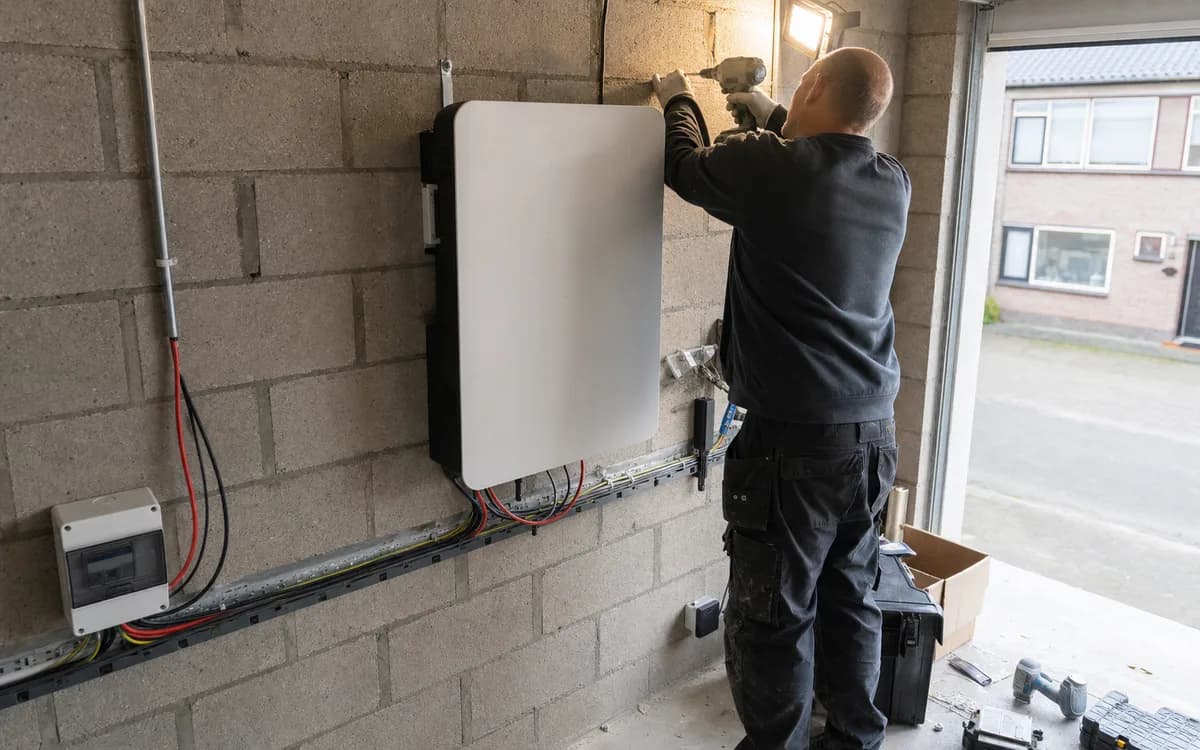
08:00–10:00
materials arrive, unpack, start mounting
10:00–13:00
secure battery, run cable routes to inverter
13:00–15:00
meter cupboard and inverter connection (brief power off possible)
15:00–17:00
testing, configuration, instructions and handover
Connection means electrically linking the battery to your inverter and its own meter cupboard circuit. The inverter manages charge and discharge with your solar setup. The installer sets charge/discharge limits and checks RCD and overcurrent protection.
DC cabling runs between battery and inverter; AC cabling to the cupboard on its own circuit. Some circuits may be off briefly during connection. Avoid laundry or oven use at that moment.
After physical connection comes software setup: inverter–battery pairing, optional energy management and P1 reading. That happens on installation day, not weeks later.
Many homes with smart meters have a P1 port. Depending on inverter and battery, your system can better align consumption and export. The installer checks whether the port is active. No P1? The battery often still works; some control features are just limited. Discuss at handover.
Yes. Someone aged 18 or over must be present for access, questions and handover. You do not need to sit in the same room all day, but must be reachable if the installer needs input. Avoid other appointments on installation day. Unexpected cupboard issues can add 1–2 hours.
Connection means electrically linking the battery to your inverter and its own meter cupboard circuit. The inverter manages charge and discharge with your solar setup. The installer sets charge/discharge limits and checks RCD and overcurrent protection.
DC cabling runs between battery and inverter; AC cabling to the cupboard on its own circuit. Some circuits may be off briefly during connection. Avoid laundry or oven use at that moment.
After physical connection comes software setup: inverter–battery pairing, optional energy management and P1 reading. That happens on installation day, not weeks later.
Many homes with smart meters have a P1 port. Depending on inverter and battery, your system can better align consumption and export. The installer checks whether the port is active. No P1? The battery often still works; some control features are just limited. Discuss at handover.
Yes. Someone aged 18 or over must be present for access, questions and handover. You do not need to sit in the same room all day, but must be reachable if the installer needs input. Avoid other appointments on installation day. Unexpected cupboard issues can add 1–2 hours.
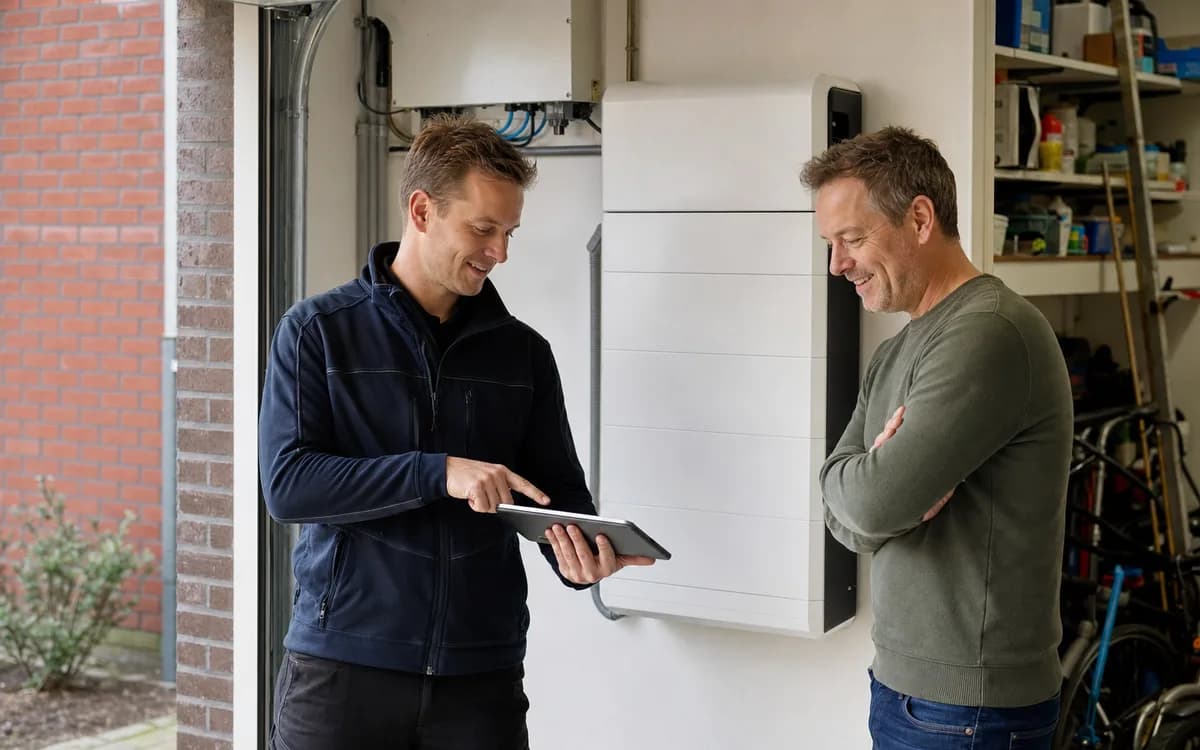
After successful tests the installer walks you through operation: app, display or portal. You see a short charge/discharge test. Behaviour in the first days may differ while the system learns. That is not a fault.
You receive documentation for records and warranty claims. Keep digital and paper copies. A tidy handover report helps when selling the property.
Battery warranty runs via the manufacturer. Installation and wiring warranty is agreed with your installer. Ask before signing handover.

Book a free consultation. We walk through your situation and the installation process together.