First the survey must confirm cupboard and location are suitable. Separate meter cupboard work may follow. Material ordering and installer scheduling come next. In busy months that can take a while. After the survey you get a realistic timeline.
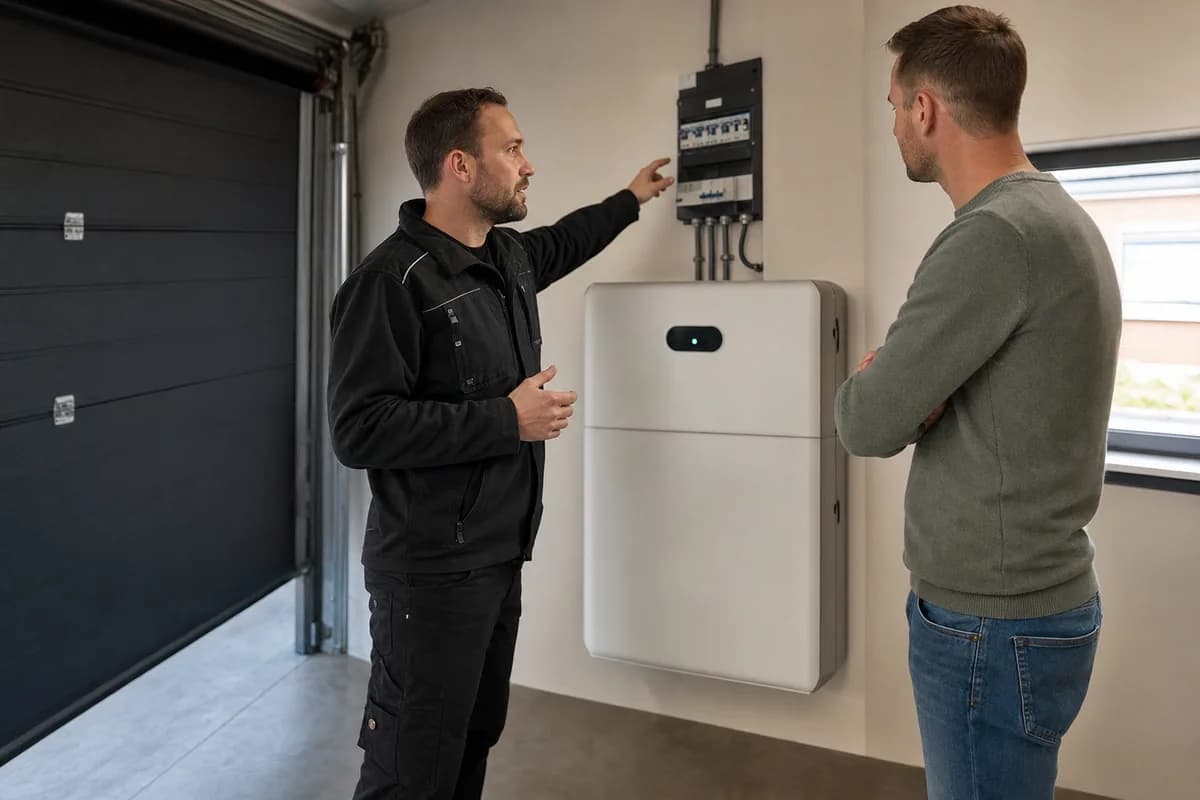
Thuisaccu installatie
Frequently asked questions about home battery installation
Answers to questions we often hear: about scheduling, disruption, meter cupboard, connection and warranty. Honest expectations about how installation runs.
Book a free consultation
Enter your details. We will call you within 24 hours.
Step 1 of 5
Where will the battery be installed?
12
12 answers · 6 topics
Most searched
Planning & timeline
When things happen, and why it sometimes takes longer than you'd like.
Meter cupboard
Upgrades, warning signs and surprises on installation day.
You cannot always tell yourself. No free breakers, an old fuse board or one cupboard shared by solar, induction and EV charger? Upgrade is more likely. Your installer assesses this at survey and explains whether one extra circuit suffices or a larger board is needed.
Opening the board sometimes reveals something unexpected: old wiring or a full rail. The installer prefers to stop rather than work unsafely. Small fixes may happen same day, larger work is rescheduled. That is why a survey upfront matters.
Installation day
Being home, power cuts, noise and what to expect.
Only if someone else aged 18+ is present and reachable for questions and handover. The installer cannot work in your meter cupboard without supervision. Stepping out briefly is usually fine. Being away all day with no contact can cancel the appointment.
Usually not. Only circuits being worked on may lose power briefly, often minutes to half an hour around connection. Fridge and freezer are usually on other circuits. The installer warns before switching.
Limited: drilling for fixings, sometimes a cable pass, unpacking materials. No digging or major construction. In terraced housing neighbours may hear brief drilling, usually one morning to afternoon. The installer tidies after handover.
Location & mounting
Indoor, outdoor and where a battery may or may not go.
No. Only models rated for outdoor use (IP rating) within system temperature limits. Wall, rain and sun on the spot matter too. The survey decides if outdoor works. If not, garage or utility room is usually the alternative.
Technical & connection
Solar panels, software and how the system behaves.
Often yes, depending on cupboard and chosen system. Inverter coupling differs from an existing solar setup. That is discussed in consultation. The survey confirms whether your situation is technically feasible.
It works after handover, but software may settle in to your consumption and solar over days to weeks. Temporary odd charge levels or app alerts are often normal. Persistent fault codes mean contact the installer.
Handover & aftercare
Warranty, documents and maintenance after installation.
The battery itself has manufacturer product warranty, often several years. Mounting, wiring and connection are agreed with your installer. Before handover, ask about installation warranty and who to call for faults. Those are two separate tracks.
Date, work performed, charge/discharge test results, photos of mount and cupboard connection, serial numbers and handover confirmation. Useful for warranty and future sale. If something is missing, ask before the installer leaves.
Little. Keep ventilation clear, do not stack items against the unit, and check the app occasionally for fault alerts. Do not open internal battery parts yourself. Follow any inspection interval in the manual. You do not re-do mounting work yourself.

Get started
Ready to know what your installation involves?
Book a free consultation. We walk through your situation and the installation process together.